Showing posts with label Jesus statement. Show all posts

Monday, August 24, 2026

The Agony and the Ecstasy (New York City 1966)


The Agony and the Ecstasy

By Anthony Burton

The Daily Mail

August 24, 1966


    The Beatles stepped onto the turf of Shea Stadium last night, and the world went mad. Kids in tight hip huggers, kids in miniskirts, kids in poor boy sweaters, 45,000 of them took a deep breath and started screaming and squealing and screeching and sobbing till the whole stadium seemed to rock. 

    It couldn't get any worse, you thought, trying to shield your eardrums, but it did. When the Beatles climbed on the platform and started to play to the packed stands, Ringo, John, Paul, and George attacked their instruments with the dedication of men earning hundreds of dollars for every note they played. But the kids screamed even louder. It seemed a pity. The kids were making too much noise to hear their idols.

     Some of the kids started jumping onto the turf in an attempt to get closer to the kings of kiddydom. Cops headed them off and carried them away. More than 100 police reinforcements, together with policewomen, streamed onto the field and confronted the stands. After 30 minutes, it was all over. The Beatles raced to a station wagon and drove off into the night. From Flat Bush Avenue and Columbus Avenue, from East End Avenue and Park Avenue, the hordes of kids had poured into the stadium, paying an average of $4 for the privilege of adoring the Beatles in person. Waving above their heads were such bannered battle cries as "Ringo is sexy" and "America loves you."

     It was just like their earlier visits, except that they seemed smaller, as if they had been tamed. Their eyes, sad spaniel eyes under the long fringes, were haunted now by the ghost of a hick disc jockey. The kids screamed, and the money poured in, but it could never be the same. The Beatles would never be able to forget that they had bent the knee and apologized to the hick disc jockey from a state notorious even in the South for its bigotry and racism, and then they had suffered the humiliation of having their apology patronizingly accepted. 

    The sad irony was that when John Lennon said the Beatles were more popular than Jesus, he was touching on a serious issue. That, of course, is fatal in the world of Good Guys and Murray the K and transistors. You can be imprudent about the Queen, but you can't get away with trying to discuss a serious subject. That's not cool, baby. 

    And so Lennon presented his glass jaw to people who would rather attack the innocent who raise a problem than the problem itself. It's easier. They denounced the satanic foursome and burned their records. Even then, the Beatles could have saved themselves by one of those flip remarks with the Liverpool twang around the edges. But they were older now, and corruption inevitably comes with age, and there were all those records to be sold and all that money to be collected. 

    Lennon became the penitent. He announced he was sorry he had ever made the remark. Few popular idols can pin down the exact moment when they reached the pinnacle and then began the long slide, the downfall. The Beatles call it into obscurity, but Lennon and the others will be able to do just that. It will take years to complete the slide, and lots more money will roll in. But when it's done, they'll look back up the slope and see that it began August 11, 1966, the day Lennon tucked the flip remark into his cheek and instead pleaded to an Alabama disc jockey that he had been misinterpreted. 

    Well, it was fun while it lasted. And there's always Mick Jagger of the Rolling Stones. Can you imagine him apologizing? Give him time, baby. Give him time.

Sunday, August 16, 2026

Beatle Fans Back Idol's Remark (1966)


 Beatle Fans Back Idol's Remark

By Lisa Cronin

The Morning News

August 16, 1966


    Eight Wilmington area girls think Beatle John Lennon was not far wrong when he said the group is more popular than Jesus, and they're out to prove it tonight. The eight will be driven by Frances J Nicoletti of 312 Silverbrook Drive, Elsmere, father of one of them, to attend the 8p.m. Beatles concert at John F. Kennedy Stadium in Philadelphia. 

    With them will be a hand-painted sign proclaiming, "We luv you, Beatles," "Beatles or bust," and "Beatles 4-ever." The girls say they hope to show the Beatles that their fans are still loyal, despite the controversy caused by Lennon's remark.

     Several radio stations across the country banned Beatle Records to protest the comment. "I think that they were misinterpreted," said Marlene Konopka, 15, daughter of Mister and Missus Henry Konapka, of 323 Osborne Road, Elsmere, "but they still are basically right," she added.

     "Yeah, you just put a Beatles concert next to a church and see which gets more people," another chimed in. The girls said they were relieved that the controversy didn't cause the cancellation of the Philadelphia concert. Each wrangled $5.25 from her father to attend.

     Lennon later apologized for his remarks at a Chicago news conference on August 11. "I think that the whole thing was unfair, but I love him twice as much since he apologized," said Mary Ellen Medkiff, 14, daughter of Mister and Missus Samuel L. Medkiff, of 1322 Clifford Road, Oak Hill.

     Tonight the girls plan to arrive at least an hour early, and hope to attract the Beatles' attention with flashing lights. They say they're taking along other Beatles' equipment, such as Beetle dolls, sweatshirts, books, and posters. "I know I'll get to meet them," said Debbie Berry, 12, daughter of Mr. and Mrs. Albert G. Barry, of 302 Taylor Road, Elsmere. "I'd like to kiss every one of them and then melt at their feet."

     The other girls are Gail Schmidt, 12, daughter of Mr. and Mrs. Edward C. Schmidt, of 205 Rosemount Drive, Elsmere, Marie Nicoletti, 12, daughter of Mr. and Mrs. Francis J. Nicoletti, Georgine Mellon, 15, daughter of Mr. and Mrs. Albert E. Mellon, of 1047 Wagner Drive, Woodland Heights, Linda Rattle, 15, daughter Mister and Missus James Rattle of 110 Valone Road, Valone Village, and Charlotte Godfrey 14, daughter of Mister and Misses John A Godfrey of 902, Highland Avenue, Marshalltown. 

    Debbie Berry added that she likes the Beatles more than she does her own boyfriend, but would she like to marry one? "No, I don't think so." Came the reluctant answer.

Tuesday, August 11, 2026

Beatles Sing New Tune in Subdued Tone Here (1966)


Beatles Sing New Tune in Subdued Tone Here

By Jean Etsinger

Chicago Tribune

August 13, 1966

    On my way to the blasphemous Beatles press conference, this cab driver told me, "I guess they didn't really mean it. (You know whose remark about you know what) But they shouldn't boast about themselves."

     Well, if they ever did before, they don't any more. I was prepared for most anything from the Beatles, except quiet, polite, and thoughtful replies to reporters' questions. From what they've been saying during their brief stay in Chicago, the four floptops not only don't think they're greater than Jesus, they don't even wish they were.

     In the press conference Thursday, the Beatles apologized for a slur upon Christianity attributed to John Lennon in an interview. Lennon told reporters he didn't mean it, and "I don't have unchristian thoughts."

     Their first night's headquarters were at the Astor Towers Hotel, Astor and Scott Streets, but they slept at the Ascot Motel, 11th and Michigan Avenue, and spent last night at another undisclosed hotel.  The secret maneuvers were undertaken to prevent teenage crowds from creating incidents outside the Astor Towers Hotel. 

    Things weren't up to Beatlemania standards. Some 200 teenagers, mostly girls, dutifully demonstrated for their idols. Now and then. Mostly when the television cameras were grinding, and the flash bulbs were flaring in their faces. When "they" tossed a paper object from a top-floor window, dozens of screaming girls dived to the pavement, trying to grasp it. A few emerged triumphantly with wadded scraps. One of the few males noted, "Maybe next time they'll throw something big -- like Ringo."

     Are the Beatles still number one? Not according to a group of teens I talked with outside the hotel. One boy said the Byrds are the most popular, but the other voted for the Stones and the Raiders. "Mostly because we see them a lot on television and dance to the records."

     John Lennon says "We don't think we're slipping. Our music is better. Our sales are slipping," he says it as if it's no big thing. In fact, I got the impression that being a Beatle isn't the greatest sometimes. This is the group's third visit to Chicago on tour, and they've yet to see anything of the city. George Harrison notes philosophically that if they really do slip in popularity, "Then we'll get to do things like visit Chicago." That made me feel sort of sad.

Sunday, August 9, 2026

Pickets: Stop Out the Beatles!


Pickets:  Stomp Out The Beatles!

By Robert Alt

The Grand Rapids Press

August 9, 1966


    The Beatles are dead. A remark by Beatle John Lennon that the group is more popular than Jesus has shocked many of their fans into a state of temporary sanity. It has been explained that the statement was quoted out of context. Repercussions following the statement are still being felt.

    Radio stations are canceling the mop-top group songs. Fans beyond the shock point are mourning, and Prime Minister Harold Wilson is worried that Britain's balance of payment problems are going to worsen without the export trade generated by the Beatles.

     The Beatle ban all began down in the south, and now the Ku Klux Klan is saying they were right all along. Robert Shelton, Klan's imperial wizard, applauded the boycott and hooted that the Klan previously had accused the Beatles of leaning toward atheism.

     In South Africa, a high school principal asked his students to rededicate their lives to Christ by burning all their Beatles records and pictures.

     Brian Epstein, the Beatles' harried manager, has been scurrying around the countryside trying to calm the waters. He said the Beatles' four-week, 14-city American tour, scheduled to begin Thursday in Chicago, was still on. 

    Five young ex-Beatle fans turned to picket a local radio station, WLAV, in hopes of getting the group removed from the air. They are Kay Weeda, 11; Mary Davis, 14; Bonnie Weeda, 12; Mary Pontius, 15, and Linda Weeda, 14. 

    "Their fame has gone to their heads", said Miss Davis.

     "This is a good punishment," Miss Pontius said. "Hit 'em in their pocketbooks. That'll make 'em sorry. "

    "They won't be very popular in Grand Rapids any more," Linda said. 

    Vince Ford, program director at WLAV, explained why the station continues to play the Beatles' records, even though other stations in town have discontinued play. "We will not ban the Beatles until they are proven guilty," he said. "As I understand it, the statement was taken out of context. We're judging them by their talent, not by their religious beliefs. And as for all this public outcry, we've received only one letter and maybe half a dozen phone calls."

     Some people who passed the pickets voiced agreement. "Good for you," said a middle-aged woman. A carload of teenagers passed and gave hip hip hooray for the British group. One elderly gentleman said, "Who are the Beatles?"

Tuesday, August 4, 2026

Brian cleans up the mess


 August 4, 1966

North vs. South views on the controversy (1966)


I have always found it interesting to read real people's reactions to John's Jesus Statement during the controversy in the United States.  I chose two different areas of the United States to share what people were saying.  The first article is from Wisconsin (in the north) and the second is from North Carolina (more in the south).  


They're Still Loyal To Beatles

By Clifford C. Behnke

Wisconsin State Journal

August 8, 1966

    If some teenagers in the United States are about to burn their Beatles records, it doesn't look like their counterparts in Madison are going to pitch the first disc.

     The Beatles' banning and burning began two weeks ago in Birmingham, Alabama, where two disc jockeys retaliated against Beatle John Lennon's remarks in Datebook magazine by instigating a ban on Beatles records on their stations and urging listeners to send in Beatles records, wigs, and other souvenirs for a big bonfire.

     Lennon was quoted as saying the Liverpool quartet now was "more popular than Jesus Christ, and that Christianity will vanish and shrink."

     "I think it's stupid to ban their music for something he said," freckled Jenny Sheahan, 15, said in Lennon's defense as she finished a Coke at King's Restaurant on the square Saturday afternoon. "I don't think he was right, but he's entitled to what he thinks," said Jenny, who saw the Beatles in person in Chicago last summer. "I think the radio stations know that the teenagers don't want the stations to ban the Beatles," she added. 

    Madison's two rock and roll stations, WISM and WMAD, which play the Beatles records, will continue to play the group's recordings. The stations are allowing their listeners to voice their views on the controversy over the air. Both report that callers are not in favor of a ban on Beatles music. 

    Janet Robey, 17, a clerk at Victor's Music Store on Capitol Square, said, "It was ridiculous to say what he did," but she also thinks a ban on the Beatles would be equally ridiculous. Janet added that she thinks some parents and teenagers who never liked the quartet are behind the ban movement. 

    Tom Forsythe, 17, who leaves for the Air Force today, agreed and said, "I don't think the ban is right." He was one of the few teenagers interviewed who liked the new Beatles single, "The Yellow Submarine", which was released last week. "It's an unusual sound for the Beatles," he said. The majority of teens said they disliked the new record, but not because of the recent controversy. It was too unusual to be readily accepted, according to most.

     Freckled and pert, Janice Nash, 16, said, "I still like 'em. I think John was joking around when he said it."

     Sue Fass, 17, said she doesn't think religious beliefs should interfere with their music. "I think that's two different things. Christ stands for religion, and the Beatles stand for something else."

     Peter Robinson, 14, a drummer in the four-piece Intrigues, a Madison rock-and-roll group, was not a big fan of the Beatles and was also against the ban. But he was critical of the quartet's drummer Ringo. "He doesn't change his beat from record to record."

     "I don't think people should take it seriously," said Camilla Carraher, 14, another customer at Kings. "It's just that they're in the public eye so much they have to be careful what they say," she said. "But I don't think John should have said it in public."

     A giggling Linda Young, 14, said they didn't mean that when they said that. "It's not their fault. If people listen to the records, it means people aren't paying as much attention to religion these days." Linda said she was ready to picket herself if Madison radio stations banned the music. 

    Blonde, blue-eyed Candy Lofton, 14, of Minneapolis, said, "The Beatles are not more popular than Christ, and they never will be." She attributed the group's popularity to their hair. Candy was lucky enough to see the Beatles perform in Minneapolis, but she didn't hear one note they sang because everybody was screaming. 

And the Beatles still are a scream.  Most teens are still loyal fans, and even the less enthusiastic throw cold water on possible Beatles bonfires in Madison. 


Beatles Battle:  Take It Or Leave It

No Writer Listed

The Salisbury Post (N. Carolina)

August 6, 1966

    You can just about believe what you want to about the Beatles controversy with so many different versions out. If you've been looking for a good excuse to dislike the Beatles, you have one now if you want it.  Or if you still want to remain a Beatles fan, you can do that too by saying that John Lennon of the Beatles was quoted out of context or whatnot.

     What is certain is that the whole incident has caused many local youths to reassess their sentiments about the singing group, as the short interviews indicate. What is perhaps most ironic is that some youths who could never have been swayed into disliking the Beatles by anything their parents or other adults could say have done so now on the basis of what a Beatles himself is said to have said. 

    The following paragraphs are some of the things carried in several newspapers about the controversy: "The furor was set off after a magazine article quoted John Lennon of the Beatles as saying the mop-haired group is more popular than Jesus. More than a dozen radio stations in North and South Carolina have dropped recordings of the Beatles from their programs because of what they consider a sacrilegious remark attributed to a member of the long-haired group.

     "Beatles manager Brian Epstein said John Lennon had been misinterpreted. When a newsman asked Epstein if he actually believed the Beatles were more popular than Jesus, he snapped, 'Of course not!'

    "'I do not think for one minute that John Lennon intended to be flippant or irreverent,' said Miss Maureen Cleave, whose interview with Lennon set off the wave of Beatles bannings in the United States. She continued, 'He was simply observing that so weak was the state of Christianity that the Beatles were to many people better known.'

     George Chun -- Zimmerman's employee -- Route 4, Moxville:  "Personally, I don't think they're more popular than Jesus Christ. I don't think they will outlive Jesus Christ because religion has been here since His time. Man has to have something to believe in and strive toward. This group, I think, is just a passing fancy. The long hair attracts the young ladies. I do like them as a group, although my favorite kind of music is progressive jazz. If anything, I think John Lennon was saying those things in that interview to cause more talk about the group."

     John Bulcher --radio announcer, salesman -- Route One: "I never really thought they would come out with a statement similar to the one they are credited with. It seems to me that they are condemning themselves. Lennon has used a comparison which I think is out of bounds. Our station doesn't play Beatles music by the Beatles, but by other groups doing their songs. Our musical format doesn't allow Beatle music by the Beatles anyhow, so we don't have to make a decision about whether or not to play them after this. 

    Danny Fisher -- Assistant Kenny's Manager -- Morepark:  "As I understand it, there's been a mistake in what he said. It's unexcusable if he did say it. What I think must have happened is that John Lennon said, referring to a few teenagers, that even the Beatles are more popular right now with some teenagers than Jesus Christ is. With just a few young people, I think he is correct. I don't believe the majority feel that way, though. I don't really believe Lennon said it, meaning what he did."

     Mrs. Eddie Nester -- store decorator-- North Main Street:  "I just think it's disgusting. They've got a lot of influence with young people, and he should have known it would cause a big controversy. Somebody like that ought to watch what he says. I used to like to listen to the Beatles, but not anymore. Nowadays, Johnny Mathis is about my limit. I don't have to worry about buying their records because, you know, you don't buy records after you're married. "

    Herman Hyman --smoke shop owner--Rutherford Street:  "I think John Lennon's statement reflects a kid carried away by his own popularity. I believe the kid is not one who doesn't believe in religion. I think he does. I also think he's sorry now. I don't think it's so much about possible financial consequences as about the fact that he has disillusioned so many youngsters and knows he cannot undo what he has done."

 Paula Hyling -- high school senior-- Birmingham, Alabama: "I like their music, but I don't like the things they have been saying. I have bought their records. I just don't believe the things they said are true. They must think they are so big now that they can say anything they want to and get away with it. I used to be a real fan of theirs; they have just kind of made me mad."

     Earl Smith -- fiber industry employee -- Route Four-- Moxville:  "I'm a Beatle fan, although I'm not crazy about their style, their hair, or their clothes. I think they are kind of overjudging themselves. I just don't think they're that popular. Younger people than myself are really the ones who have kept them in business to date. It's a fad; it will die out."

     Charlene Carscaddan - West Rowan, Southmore- Route Six:  "Right now, I don't like them. I don't think there's anybody better than God. I was a fan of theirs. I just like their music. Now, I'm not going to buy any more of their records. Period."


Sunday, August 2, 2026

Datebook and the Bigger Than Jesus Debacle of 1966


Last year I traveled to Columbia, Missouri and was able to take a look at the Art Unger files in the archives at the library there.  It was so interesting!  Art Unger was the editor of Datebook magazine.  Here is what I discovered during my time there.  I really want to go back because the few hours I had was not nearly enough. 


Tony Barrow sent Art Unger of Datebook a clipping of the Maureen Cleave interview with John Lennon in early March 1966.  Art liked the article, and because Datebook "tries to cut a bit deeper than the fan magazines do," he thought the John story, as well as the ones about Paul, George, and Ringo, might fit well with his magazine.  During this time, Art was in the process of moving Datebook from a quarterly publication to a monthly and was particularly looking for articles that would sell magazines. 

Art contacted Maureen by mail and asked whether she could redo the articles specifically for Datebook.  She was happy to add to and redo her original journal articles for the magazine for teenagers, and Art paid her only $150 for the job.  He was willing to pay her $150 for all four rewrites of the articles. Cleave wrote back to him, "The fee you offer is laughable. I do not mean to be rude, but you cannot have expected any journalist of any standing to write so much for so little."  

Not willing to negotiate the price with Maureen Cleave, Art went straight to the United Features Syndicate and paid $150 for one of the articles in the series.  By reaching out directly to the syndicate, Cleave's articles were not rewritten for the teen magazine, and she did not receive any money for their publication in Datebook.  She most likely didn't even know they were in the magazine until everything blew up. 

Art's next move was to capitalize on the Beatles quotes that would stir up the most noise and sell the most magazines.  He put the most shocking quotes by Paul and John on the front cover and then sent the copies to one specific place in the United States.  Art himself said, "I knew that was a controversial one, and I sent advance copies to Bible Belt disc jockeys."  Yes, Art Unger himself, the editor of Datebook, was the person responsible for sending disc jockeys in the Deep South the magazine with the "more popular than Jesus" quote right on the front cover, with the hopes that it would shock the jockeys so much that they would talk about it on the air and cause more people to buy his magazine. 

And we all know that is exactly what happened.  The disc jockeys didn't read the article, but read the cover and talked about it on air to gauge local reaction.  Listen to one of those radio discussions was Al Benn, who was a UPI Reporter listening in Birmingham, Alabama.  He heard the outrage from the jockeys and listeners over what John Lennon said about Christianity and the station's plan to ban Beatles music and organize a Beatles burning, and thought it was too good a story to pass up.  So he wrote an article about the Beatles ban in the South, and it got published in the New York Times and other newspapers around the country.  

Art realized that things were getting out of hand, and so he contacted Brian Epstein, who was on holiday and most likely didn't want to be bothered with nonsense from a teen magazine editor.  Art told Brian that things were getting out of hand and that Beatle burnings were being planned all throughout the country.  To this, Brian said to him, "Arthur, if they burn Beatles' records, they'd better buy them first."

Once Brian realized how big a deal the situation had become, he came to the United States to straighten things out.  He told the press that John had been "quoted and represented entirely out of context," but Teenage magazine reprinted the Lennon interview from a London newspaper.  He continued to say, "It was understood by him (John Lennon) and myself to be exclusive to the Evening Standard. It was not anticipated that it would be displayed out of context nd in such a manner that it was in an American teenage magazine."

Art Unger was mad that Brian said, time and time again, that the article was "taken out of context" and "misinterpreted" because it had been reprinted word for word from its original London publication.  He had not changed a thing, and remember, he was too cheap to pay Maureen Cleave to make any changes to it.  

Brian said, "It's quite unfortunate that this quote and this article appeared in a teenage magazine where it's open to so much misinterpretation."  After that, Art confronted Brian about the statement he kept making, and it simply was not true.  Nothing about the article was taken out of context.  To this, Brian told him, "The distortion came by placing it in a teenage magazine" 

Art never gave up trying to sell magazines; in the 1970s, he was publishing the Christian Science Monitor magazine and contacted John Lennon, saying, "Maybe we should do something again to see if the Beatles had proven to be bigger than Jesus." 


Thursday, August 11, 2016

Second go round


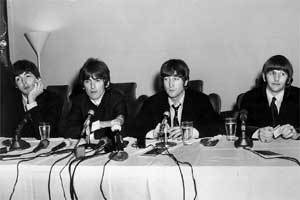
the Beatles then held another press conference in Chicago--this time for newspaper reporters from around the world.   Once again, John tried his best to explain himself.  August 11, 1966 was a long, hard day for the Fab 4.

The Dreaded press conference


I would guess that the press conference the Beatles gave on August 11, 1966 in Chicago where John Lennon tried his best to explain what he meant when he was interviewed by Maureen Cleeve is the one press conference almost every Beatle fan has memorized.  

Here is what the newspaper had to say about it:

Beatle sorry he said it, Hopes Christianity Lives
San Francisco Examiner Friday August 12, 1966
Associated Press (Chicago)

“I’m sorry I said it really  I never meant it as a lousy, anti-religion thing,” apologized John Lennon.  He tried to explain his remarks about Christianity that set off boycotts and bonfires in the United States.

The man thing, Lennon said, is that he was misunderstood.  “I wasn’t saying whatever they’re saying I was saying,” he explained.  “I was sort of deploring the attitude toward Christianity.  From what I read or observed, it (Christianity) just seems to me to be shrinking, to be losing contact.  

Paul McCartney added, “And we all deplore the fact.”

Lennon said he was “worried to death” about the controversy aroused by this statements that the Beatles “are more popular than Jesus” and that “Christianity will go.”

Some U.S. radio stations have banned Beatle records since Lennon’s remarks were published in an American teen magazine.  Some former fans have built huge bonfires of Beatle records and pictures.  In England, Lennon said his remarks caused hardly a ripple.

“They were just taken as a bit of a loudmouth thing,” he said.

The singers arrived yesterday.  They were greeted by a small, quiet group.  When their limousine drove up to North Side hotel, however, things were more normal.  There were about 200 screaming, leaping, frantic teenagers swarming all over the car.


The quartet was asked if their popularity is slipping.  “If we do slip, so what?  Who cares?” said George Harrison.  “We’ll just be  where we were before—only a lot richer.”

Getting ready for dreaded press conference

John and the rest of the Beatles gathered into Tony Barrow's suite at the Chicago Astor Towers to give the press conference that would make or break the rest of the tour.   According to Tony Barrow, John was very upset about the whole ordeal and he was afraid that his words would cause harm to his bandmates.   Barrow witnessed John putting his face in his hands and weeping.    I just can't imagine how terrible John must have felt....


Tuesday, August 2, 2016

4 Reasons why People in America were so upset by John Lennon's "Jesus Statement"

4 Reasons why People in America were so upset by John Lennon’s “Jesus Statement”
By Sara Schmidt
August 2, 1966


                50 years ago The Beatles’ music was banned and countess Beatles’ records were burned as a response to a statement John Lennon made to an English newspaper.   John’s “Jesus statement” controversy has been analyzed and written about numerous times over the years that there is no need to rehash the story; however, what I wanted to understand is WHY Americans got so upset over a remark made by a pop star in a teen magazine.  But before we discover why, let’s look at a little background information first.

                Maureen Cleeve was a journalist and friend of the Beatles.  During the spring of 1965, she interviewed all four Beatles and Brian Epstein separately at their homes for a series of articles that were published in the London Evening Standard in March of 1966.   Parts of John’s article, which included his quote about Jesus, was also published in the San Francisco Chronicle that same month.    Tony Barrow offered the four Beatles articles to Art Unger of Datebook magazine.  The Beatles particularly liked Datebook because it was much more progressive than the other teen magazines of the day.   It featured stories about race relations, teenage pregnancy and the effects of LSD among the latest news about music and film stars.    Unger purchased the rights to the articles and saved the stories on John and Paul for the September 1966 issue, which came out on July 31, 1966.   This issue was called the “shout-out” issue and it featured proactive quotes from seven people including John Lennon and Paul McCartney.


                In Birmingham, Alabama WAQY radio DJ’s Tommy Charles and Doug Layton went on the air talking about what John Lennon had said in Datebook as part of their morning show.   They regularly read headlines from newspapers and magazines and discussed them.   They made a decision after receiving a few calls from listeners to ban all Beatles records on their radio station.  A reporter from UPI heard the broadcast and wrote about the Beatle banning in a story that was published in newspapers around the country.   As the story spread, more radio stations banned the Beatles’ music.  Teenagers started to express anger over what was said.   Beatle burnings were planned for former fans to get rid of their Beatles collections and the Ku Klux Klan were burning Beatles records that were nailed onto crosses and speaking out against the band.


                Why was there such a furor?   Why did so many Americans get so upset by a pop star saying that his band is more popular than Jesus.?

1.         Most people neither understood what John said nor what he meant
A lot of Americans, including Tommy Charles, never read the Maureen Cleeve article.  While Datebook printed the article in its entirety (except for the introduction), the people only heard the most shocking parts.  John said that the Beatles were “more popular than Jesus;” however, many believed he said that the Beatles were “bigger than Jesus,” which has a totally different meaning.  They did not understand that John was not talking about people in America, but was speaking about the Church of England, which had seen a drastic decline in numbers.  


2.        They took John’s statement personally and they were hurt by it.
One girl who was interviewed by Richard Lindly for the ITV news story, “Reporting ‘66” really explained this when she said, “A lot of people are ‘good Baptists’ down here.  Everythign about religion they take very personally.”    In the same story, another girl tells Lindly, “It hurt people’s feelings. People used to think so much of them because they were for the teenager and everybody thought they were so good.  And then they came out with something like this.  It sounds like they are making fun of everything we like.”    One girl was asked by a reporter in St. Louis, Missouri about her thoughts on the matter and she said, “I liked the Beatles when they first came out, but when they said what they did about Christ, I was hurt and I don’t care for them anymore.”  

The people who felt this way were fans that admired The Beatles, but also considered themselves Christians.  They felt that by saying that by saying that the Beatles were more popular than Jesus that John was bragging that the Beatles were better than Christ, an idea that insulted their core beliefs.   It hurt their feelings and angered them.  In some places teens were forced between The Beatles and Jesus, a choice that they blamed The Beatles for making them have to choose.


3.        It was Anti-American
At first glance, the thought of a group of British singers being called “Anti-American” is laughable.  However, those who felt this way were very serious.   From their point of view, the Beatles became popular and made all of their money because of their American fans.  John’s statement was an insult to Christian and therefore towards America, the place that made them famous.   In “Reporting ‘66” one girl adamantly proclaimed, “I’m a Christian!  So many people have built buildings in the name of Christ.  What have the Beatles done for us?  We’ve done more for them!  We don’t owe them a thing.  We shouldn’t just sit back and take it.”   One person wrote a letter to the Chattanooga Free Press stating, “Americans favor the bais of the religion that founded our country, not a group of young men suffering from a serious lack of responsibility, respect and Moravian conviction.”    And one woman named Patti told the Desert News, “It is disgusting how the Beatles think they are so cool that they can say anything they want about the religious beliefs of the majority of Americans then come over to our country and take in fabulous sums of money.  They seem to think that they can trample over us and in everything we believe in and still be put on a golden pedestal for us to admire and worship as idols.”  


4.        The statement John Lennon made would turn teenagers into atheists and communists. 
In 1966 America, 98% of the  adult citizens said they believed in God.   Times were changing and there was a fear that the next generation would turn their back on religion.  In April of that year Time magazine’s cover declared, “God is Dead,” which did not help this fear.   Closely linked to atheism was the fear of communism.   While the “red scare” of the 1950’s had mostly died down, there was still some lingering fear, especially in the Southern states that communism would one day take over the United States.   Knowing that pop stars held a strong influence on teenagers, many of the older generation feared for their children’s future after hearing about John’s remarks.  A man named Raymond told the Dessert News, “If what John Lennon said is what the Beatles believe, their belief is a high degree of atheism.   If this is so, then they should keep their beliefs to themselves while in the U.S.”   Robert Shelton, the grand wizard of the KKK told Lindly, “These individuals want to vilify Christ and come to America and still continue collecting sums of money.  I think this is a dangerous trend because I think they are concerned with the development of socialism which once you have socialism in action, it graduated into communism.


50 years later these ideas seem somewhat silly.  Many people got swept up in the drama of it all and followed the crowd.  There are some who anonymously today confess that they threw their Beatles albums in the fire during the excitement of the moment only to regret it and purchase them all over again in the following weeks.

                There were also Americans that did not approve of the boycotts.  Loyal fans that agreed or didn’t care what John said and continued to purchase Beatles records and defend the Beatles in magazines and newspapers come out in droves to support the Fab 4.  


                There also was a group of people that disliked what John said.  They thought he was an arrogant jerk for making such a bold statement, but they also believed that he had the right to state his opinion without being terrorized or boycotted.  As one girl in St. Louis said, “It’s his opinion and it’s wrong, but since it is his opinion they shouldn’t band their records and things.”  And another said, “I thought it was a rather vain thing for him to say, but I don’t think it should affect his performance any.”

                50 years later John’s Jesus statement is still something that is discussed and written about.  In 2010 the Vatican made an announcement that the Church forgave John for saying  such a statement.   


                It is hard to believe that such a small statement could make such a controversy; however this phenomenon happens with people even more so today with the advent of the internet.