Rock and Roll Circus
By Chris Nickson
Discoveries
February 2005
For many years, until its official release on video in 1996, one of the most elusive and collectible Rolling Stones artifacts was the Rock and Roll Circus show filmed over two days at the end of 1968 that had never been shown, a few pieces had teased out, such as the Who's performance, which turned up in The Kids Are All Right. For the most part, it stayed hidden away for the best part of 30 years, the holy grail of Stones fans.
More recently, it has made a belated appearance on DVD, finally coming into the digital age. But the story of the Rock and Roll Circus, both of its making and its resurrection are the stuff of music lore. It was directed by Michael Lindsay-Hogg, who, despite his name, isn't English but Irish-American. He'd been in England for a few years, working in television and making some of the earliest promotional music films for The Beatles and The Stones. And he'd go on to direct Let It Be and the epic miniseries Brideshead Revisited, among other things.
In Britain in 1968, there had been nothing like the idea of the Rock and Roll Circus, which was conceived as a television special. There were weekly shows such as Top of the Pops. The Beatles had unveiled the enigmatic Magical Mystery Tour. And there had been a program showing the Doors and Jefferson Airplane in concert at London's Roundhouse.
"Ready Steady Go, which I directed, was the closest thing, because we were connected to the bands," Lindsay-Hogg recalls, "and because we were live, unlike Top of the Pops, it gave the bands more leeway to do the plug song and two or three others. It was a very good atmosphere. You could have people playing with each other. So it was a good feeling on that show. "
He'd come to know the Stones and was approached when Mick first first mooted the idea of a television special The Circus. Lindsay-Hogg said, "Well, it's my concept. But Mick Jagger, then, as now, was very involved in everything. So any ideas I had, I would always run by him. It was a hard thing to come up with a concept that seemed to fit their image and also the image of the kind of show he wanted to put together.
"I remember being very happy when I was doodling on a pad in their offices on Maddock Street. I doodled a circle, and I thought, 'A circle looks like a ring'. Then the title came to me before anything else, The Rolling Stones Rock and Roll Circus. I thought there was something there. It was as unformed as that. I called Mick, but he was asleep. I eventually got him about three o'clock and told him. And he said, 'Yeah, that's as close as we've got so far. That's good.' He said to go on working on that. And asked, 'What kind of circus should it be?' I said, 'It shouldn't be a big, lavish Barnum and Bailey Circus. It should be a down-at-heel, tatty European circus with acts that are a little too old.' And he said, 'That's it!'
"He's extremely bright, and he was very, very understanding, especially since Andrew Oldham wasn't there anymore, in broad strokes of what their image was and which way to go," said Lindsay- Hogg. "As soon as we talked about the title and the kind of circus, that's when it started, and it never changed. We'd had occasional meetings with the rest of the band and all of them were there, and we talked about it, they signed off on it. But the person you mostly dealt with in those days was Mick, because he was what you'd call 'the guv'nor'. Mick, Charlie and Keith were the runners of the band, but Mick was the one who wanted to shoulder the responsibilities. Brian had fallen apart, poor boy."
The ideas came together in late October, and in December, they shot for two days, something unthinkably spontaneous by today's standards. But in that time and place, almost anything was possible, even if some ideas proved impossible. They had hoped to get the Isley Brothers and Johnny Cash, but approaches to both proved fruitless, so most of the acts were English. "The organizing wasn't difficult, oddly enough, and it was sort of enjoyable. In those days in England, everything was centralized in London. I used to think it was like the Impressionist painters in France. They came from different parts, but they all turned up in Paris. These bands came from all over, but they were all in London.
"There used to be a nightclub called the Ad Lib. You go there on a Friday night, look around, and see the banquets around the wall, John Lennon, George Harrison, two Rolling Stones, an Animal, a Kink, a Yardbird, whatever. Managers like Kit Lambert and Andrew Oldham, they were all there. So the organizing of the show, once we decided to go ahead with the Circus, was done in that little community.
"Early on, we decided on the Who, because they were great. Then, Keith Richards, like Taj Mahal, Maryann Faithful, was going out with Mick. Mick thought it would be great to have this supergroup. Originally, that was going to be Steve Winwood. He said he'd do it and think of some musicians. Once we got the idea for the Circus, things happened very quickly. Steve got kind of unavailable, too much marijuana, or whatever was going on. He didn't get his band together. Then he called up two or three days before we were supposed to do it, and sweetly said something was bothering his voice and he didn't think he could sing. That left us with the hole. Mick thought he'd call Paul McCartney first, then decided that didn't seem right in this mix; he didn't know what band he'd get together, since Keith wanted to play.
Then he thought the best person who'd lead himself to a nutty project was John Lennon. So Mick called John, and we had this extraordinary group of musicians. So the lineup was set with the Stones headlining, the Who, Taj Mahal, Maryann Faithful, the Dirty Mac, who was Lennon, Richards, Eric Clapton, and Mitch Mitchell, along with newcomers Jethro Tull. The only ones I didn't know were Taj and Jethro Tull." Lindsay-Hogg noted, "We got a lot of demos from bands. I'd seen Tull on the late-night BBC show, and I thought Ian Anderson was a really interesting performer with this crazy, insane Doctor performance. It was between them and a guitar-driven band, which Mick didn't want, called Led Zeppelin.
"And so the show, the logistics of it, principally and particularly of it being in London, got together seamlessly, compared to everything else, assembling the talent seemed easy. There was a studio to transform, circus acts to book, and they found some who were suitably down at heel, as well as the technical side, which didn't go as smoothly. "
The technical side was a little nightmare. "We'd imported these cameras from France," Lindsey-Hogg said. "We wanted to put the thing on film rather than tape. We had a wonderful DP, Tony Richmond, who went on to do Let It Be, The Man Who Fell to Earth, and pictures with Nick Roeg. I'd done "Jumping Jack Flash", but I hadn't had enough control over what the cameras were doing. The French system had film magazines on top of the cameras, but also a monitoring device that went into the control room, and you could orchestrate the shots. This was the first time it had ever been used, and it kept breaking down. We'd been in the middle of a song, and would lose a camera and would finish with the other three cameras. The magazines would have to be reloaded and we would lose another camera, and someone would come out with a screwdriver, inevitably."
With only two days really set aside for filming, they were asking for trouble. And the first piece of it came with American Taj Mahal, along with his band. He'd been refused the necessary work permit to perform in the show, coming into England instead as a tourist, where they were allowed to stay for 24 hours. The filming was done in strict secrecy the day before the other bands were coming to the set. And then there was the case of Tull. They were starting to enjoy the wave of success that had come with their debut. This was, but in the immediate wake of that, guitarist Mick Abrams had quit the band, and when they were called to appear on Rock and Roll Circus, they hadn't yet found a replacement. Salvation came in the form of a player named Tony Iommi with a Birmingham group called Earth, who, in less than two years, would be finding success under the name Black Sabbath. The only problem, as Tull frontman Anderson explained at the time, was "Our music wasn't really compatible with his playing." With no time to rehearse, Tull became one of two acts to use a pre-recorded backing track (the other was Faithful), with Iommi's guitar not even plugged in.
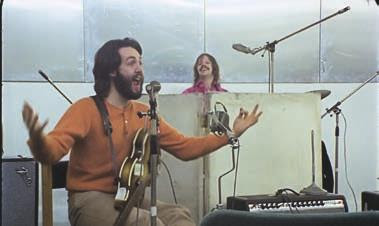
The day was carefully planned, but the technical hitches kept pushing stage times back and back. One highlight for the invited audience was the appearance of Dirty Mac with Lennon on guitar and vocals, Clapton on lead guitar, Richards on bass, and Mitchell from the Jimi Hendrix Experience on drums, representatives from the biggest bands in the UK at the time. After just a day's rehearsal, they produced a searing version of Lennon's "Yer Blues", then just released recently on the White Album. They veered into a 12-bar blues that was supposed to feature violinist Ivry Gitlis, but which was hijacked when Yoko Ono took the stage and began singing.
"I didn't even know Yoko was going to do that," said Lindsay-Hogg. Ivry, Gitlis, who was a violinist who had come over from Paris, thought he was going to play, and it would be good for him. He didn't know Yoko was going to do that, because only John and Yoko knew. He kept thinking, 'What is going on?' She kept going; he got pissed off, then resigned."
Because of all the delays, it was the wee small hours by the time the Stones finally took the stage. The crew and band were all tired, but there had been problems the night before with Brian Jones; he was barely there physically and hardly there mentally. Lindsay-Hogg recounted, "We lived near each other in Parliament Hill in Hampstead. We'd rehearsed the show and shot Taj Mahal one day, and we're going to do the whole thing the next day. About midnight, after I got in, I had something to eat, and Brian called me from up the road. He asked if he could come over. I asked what the problem was. He was very maudlin and said, 'I don't think I'm going to come tomorrow. They're being so mean to me.' I said he had to come. 'What would the Rolling Stones be without you?' I asked innocently, not knowing that two months later, that would happen. He declined emotionally and physically. Rather than fighting his depression and paranoia, he settled into it. Anyway, I persuaded him to come. He wanted someone to know he was suffering, but he was very hard to talk to. He devolved into his own world. He couldn't play much more. He broke his wrist, I think, when he was in North Africa recording Jajoukas Nomadic Moroccan Musicians.
"Because of the state he was in, he never did the exercises needed to get it strong again. He really couldn't play anymore, and that was a symptom of where he was psychologically." He did remain for the whole thing, although he was related to a very much secondary role, with Richards taking all the solos and Jones contributing minimal rhythm guitar, a little slide, and some maracas, looking plainly uncomfortable and out of it.
Finally, though, the Stones began to play. "Everyone was there by noon, and we did the player's entrance. Mick and the Stones were acting as hosts until they got on stage at two in the morning. The Stones had done a full day's work at the time they got on stage. Well, with various takes, Mick wasn't satisfied, so we did five takes of "You Can't Always Get What You Want," or whatever.
"By the time we got to the song we'd been looking forward to, which was "Sympathy for the Devil", it was four in the morning. They hadn't only been drinking tea and taking aspirin, and were all not at their best. We did one or two takes, and it was all going downhill. We weren't together musically. The camera crew was exhausted. We had a meeting me, Mick, Jimmy Miller and Sandy Lieberson, who was the producer. We thought about going home and coming the next night around nine, but by then the overages would have cost as much as rental charges, as we'd already spent. We decided to do it one more time. The Mick did this extraordinary performance. He made them. One of his gifts is his willpower. He told the band they were going to do it, and they did."
Eventually as December 8, 1968 had become 5am December 9, it was all done. Audiences and musicians went home to their beds and kept the show as a memory. But Lindsay-Hogg went to work on editing. "Even though there was no immediate BBC interest, I was an advocate for finishing it, editing it and putting it out," said Lindsay-Hogg, "but in January, I'd gone off to do Let it Be but we had a rough cut screening with Mick and Keith and Alan Klein and me.
"While they professed to like it in general, they weren't happy with themselves. I can't remember if they'd got rid of Brian by then, or about to, also, they did think the Who were very good, but they were very critical about themselves and very tough-minded about what they do. They just thought they could maybe do better. So the idea was to regroup in the spring with Mick Taylor and do the Stones somewhere. The idea was we'd go to Rome and shoot in the Coliseum and edit it onto the other footage. I was against it because it seemed like a very big stylistic goof. They just released "Honky Tonk Woman", and they wanted to put that in the show. Then, overnight, the permit to shoot in the Coliseum fell through. The papers had got wind of it and complained, and there was some worry about the amount of amplification making the Coliseum fall down. So then there was no Coliseum. Mick went off to do Ned Kelly.
"Then a year went by, and they went off to do another tour. One of the things that happened was that there were lots of rock and roll projects in those days, and everyone had lots of ideas. So if a project lost momentum, it could end up in a drawer for a while. It looked as if Let it Be would lose momentum because Allen [Klein] was using it to negotiate a better movie or record deal. So a year had gone by, and it was still in a very good rough cut stage. It was all in the cutting room. Then the Stones decided we should close the cutting room and bring all the cans of street footage to Maddox Street. My feeling was that not much was going to happen then. For tax reasons, the Stones went to France for a year. They didn't need these really nice offices, and they got a much smaller office. They couldn't fit the 35 cans of film in the new office, so Ian Stewart thought maybe someone might want it. And he took the cans of film to his house in the country and put them in his barn for safekeeping. He didn't tell anybody he'd done it. He was smart enough to know that one day someone would want everything to do with the Rolling Stones.
"Over the years, because I did some videos with the Stones, I would say, 'What happened to the Circus?' And they would say, 'I don't know,' and life had moved. Then Stu died in the late 80s, when Cynthia, his widow, went around the property. She found the cans of film in the barn. She got in touch with someone. Eventually, Allen Klein heard about it. He had a contractual thing with the Stones that he owns, or co-owns, all the pre-1970 stuff. He thought it should be reconstructed, and he got all the footage, which was hard because a lot of it had gone missing. When Jeff Stein made The Kids Are All Right, he'd taken the Who's bit. So that wasn't there. It had ended up in a vault in Teddington. So it took a lot of sleuthing work by Allen and Robin Klein to even get it in a semblance of what it was.
"The reason it's out isn't that Allen thought it would be good, but because of their hard work. It was released at the New York Film Festival in 1996 and did very well; now it's out on DVD with commentary. I think it would have been great if it had come out at the time, but seeing it so much later, it has a real different kind of value, certainly because what's happened to some of the people, also with music having changed so much. Anyone of whatever generation who sees it gets a full jolt of how good the bands all were at their peak. It was the great lost work, and quite obviously still fresh.
In Lindsay-Hogg's memory, even down to the regret, "I didn't have a documentary camera backstage. I remember when the cameras broke down, and I went back to the dressing room to tell them the delay would end. They're musicians, and they're sitting around the room all playing with kitchen utensils, guitars or singing Doo Wop songs. They were rivals, but they were all very close. Each one wanted to be the best, but they were very close to each other. They all had similar backgrounds.
I remember talking to Lennon, and the first song he liked was on radio Luxembourg called "Sha-Boom" by the Chords. None of the bands liked the music of their parents. I wish I had a camera in the dressing room."
While it was never thought of at the time, it was about the only thing that was missing in one of those strange twists, the show that vanished again returned, even winning a prize at the New York Film Festival. It captures a more innocent time when the music meant more than chart positions and record sales. For Stones fans, it remains one of the prizes, even though it's widely available.